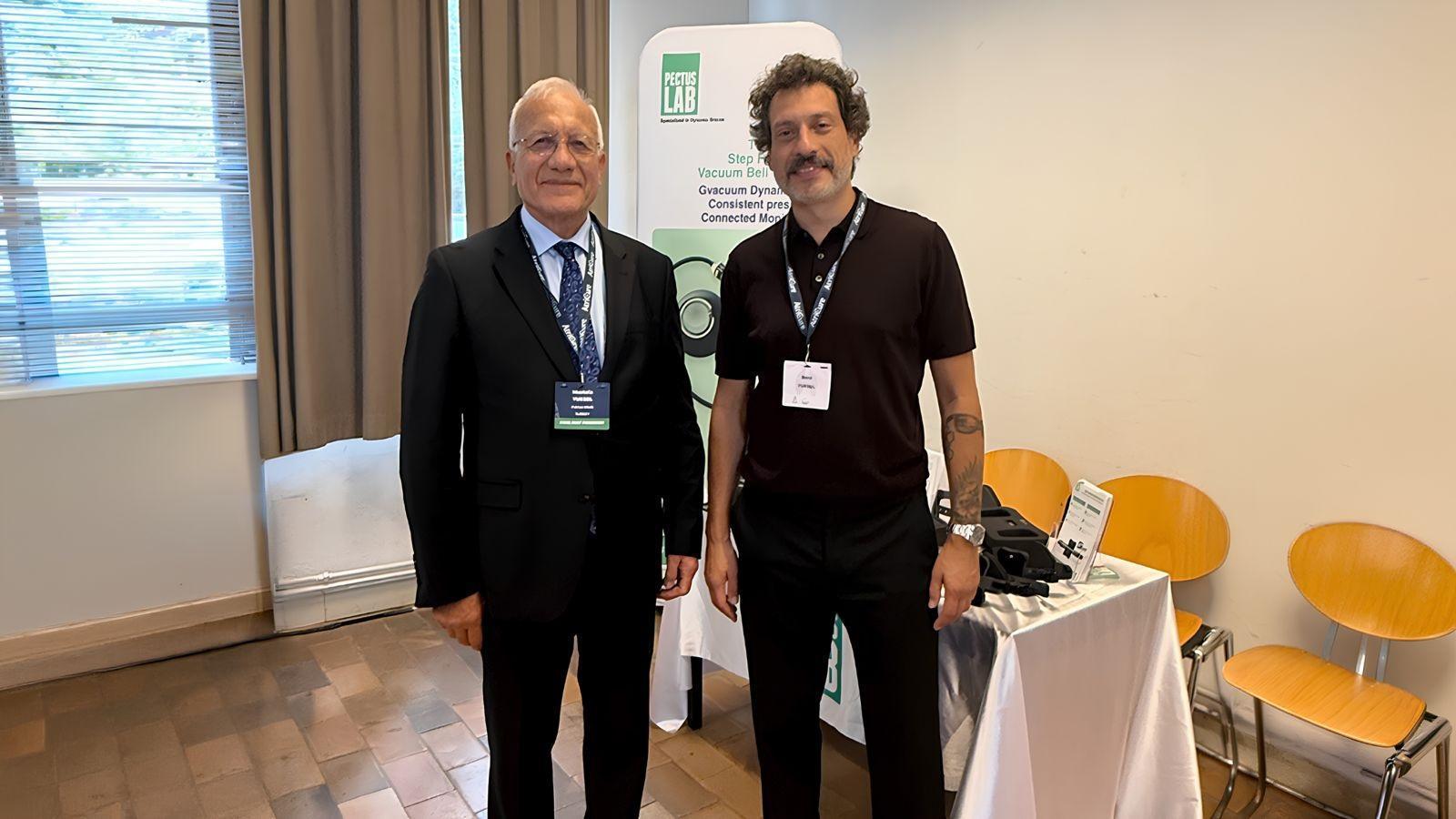
In the research conducted by the team of Ankara University Faculty of Medicine, Department of Pediatric Surgery, the 6-month results of 38 patients who received dynamic vacuum therapy and 40 patients who received standard vacuum therapy were compared.
Among the authors of the study, former Marmara University Pendik Training and Research Hospital Head of Thoracic Surgery Department, Prof., who stands out with his international experience in the field of pectus surgery. Dr. Mustafa Yüksel also took part. The research was published in the 61st volume 10th issue of the magazine dated October 2026.
In the dynamic vacuum group of the research, the 'Gvacuum Dynamic' vacuum device developed in Türkiye was used. An improvement of at least 1 centimeter was seen in more patients with dynamic vacuum treatment. In the study, no statistically significant difference was found between the dynamic and standard vacuum groups in terms of average improvement in depression depth at the end of 6 months of treatment. However, the rate of patients who achieved at least 1 centimeter improvement in chest collapse was recorded as 47.4 percent in the dynamic vacuum group and 25 percent in the standard vacuum group.
While the rate of patients discontinuing treatment was 15 percent in the standard vacuum group, there were no patients in the dynamic vacuum group. While it was stated that skin-related complaints were more common in the dynamic vacuum group, no serious complications were reported in either group.
The authors of the study pointed out that the two groups differed in terms of age and depth of chest depression at the beginning, and stated that the results were short-term and should be supported by further studies.
HE CONTRIBUTED TO THE STUDY WITH HIS INTERNATIONAL EXPERIENCE IN PECTUS SURGERY
Pectus Surgery Prof. is one of the thoracic surgeons with international experience with his studies in the field of surgery and is one of the authors of the study. Dr. Mustafa Yüksel was among those who started to perform Nuss surgery with his team at Marmara University.
Yüksel, who took part in the establishment of CWIG (Chest Wall International Group), an international organization among chest wall surgeons, served as the president of the group between 2010 and 2013.
Vacuum systems used in the treatment of hollow chest aim to correct the collapse by applying negative pressure to the anterior chest wall. In dynamic systems, the applied pressure can be measured and kept at a determined level.
Pectus carinatum, one of the chest wall deformities, is popularly known as 'protruding chest'. In the non-surgical treatment of this condition, orthoses that apply external pressure to the chest wall can be used.
The Gpad pectus carinatum orthosis developed in Türkiye is among the devices used for this purpose. However, the clinical results of the Gpad orthosis were not evaluated in the published research.
Whether both treatment methods will be applied is determined after the patient's condition is evaluated by the physician. Surgical and non-surgical treatments are considered as different options in suitable patients.
The Gvacuum Dynamic device and Gpad orthosis used in the research were developed by Pectuslab, founded by Bora Yüksel. According to the information provided by the company, the products are used in countries including Spain, Romania, Poland and England.
Source: DHA


